While the move from the O.C. to The Hills doesn’t seem too far a drive, the path band Rooney took between destinations was quite the winding road.
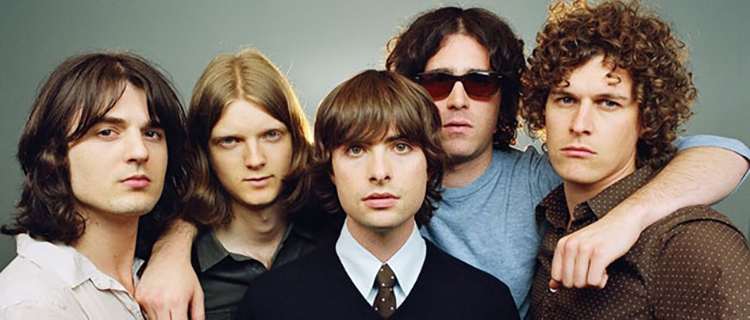
Now an independent band – it shed its major label deal with Geffen Records — Rooney’s quartet of Robert Schwartzman (vocals/guitar), Taylor Locke (guitar/vocals), Ned Brower (drums/vocals) and Louie Stephens (keyboards) has a new single on The Hills several years after its cameo on The O.C. introduced the pop-rock outfit to a fervent fanbase. The Los Angeles band is sporting a new album (Eureka) and a nationwide summer tour which includes a month of dates with Hanson. Brower, who aside from drumming and singing is also a model and actor, and in January added a new role: father. He sat down to discuss Rooney as it enters its second decade of existence:
You have an album coming out and you’re embarking on a nationwide tour. It’s a pretty good time for the band.
It’s an exciting time. It’s been a little while since we’ve gotten in the cycle again.
Not to mention you had a son born earlier this year.
That’s also been very interesting but in a different way.
How so?
It changes the way I look at things — it’s not completely about me anymore. But you know I’ve always been the caretaker in the band. I’m the eldest. People always ask “Are you like the dad in the band?” and I say “No, I’m like a big brother” but now that I have a real kid, I’m definitely not their dad. I’ve got problems of my own.
An interesting aspect about Eureka is you were on your own, but of all the Rooney albums this one best incorporates all of the members in writing and producing songs. How did that work out?
It was kind of a tricky adjustment to make. I started getting interested in songwriting again – we were all in different bands where we were the band leader — but we work great as an ensemble. Robert is a great songwriter, but the other guys are capable also. As far as the production, we learned a lot from all the different producers we’ve worked with. This was a chance to finally take all the knowledge we accrued and put it together. We were trying out different producers and not getting the sound that we wanted — it always seemed to be too slick or too raw — and with this record we captured a good balance of the two that presents the songs in the best way.
Were there any songs you struggled with?
No it all came together easier than we thought. We were kind of fighting a little bit and not going great before we started the record. We started to work with John Fields, who produced our last record and he’s a great guy and producer, but he has become really popular since we made our last album. He’s had a huge string of successes in the pop world and was really into that, and we were growing more toward wanting to be a band — an ensemble where you can hear the band — and that was the polar opposite of the way he has grown as a producer so it wasn’t working. We were struggling internally because I think he wasn’t helping mediate very well. Then we worked with a guy named Mitchell Froom and cut a song with him, and he had the total opposite effect — he embraced the band and enjoyed working with all of us and it was a good experience and it brought us together. We decided to try and make our own record because our demo production was getting really good. The moment with Mitchell Froom was important — it set us on the right trajectory to get together and make a record.
And this was all done in what was formerly a garage, so Rooney is back to being a garage band again.
Literally. I spent so much time in the garage in the early years — we worked in one for the first three years — but it feels good, it’s not overkill. We have all the equipment we need and acquired a lot of great gear over the years. We started collecting that stuff early before it became cool and expensive and now we all keep a studio at home.
The story of Rooney is a good one to tell up-and-coming bands. A decade in, and as a first person witness to what happened, what’s the best thing you’ve learned after all these years in the business and what would you tell new bands.
We made plenty of mistakes, we try and learn from them, but you have to make sure you have a good team around you. People only care as much as you do about the details. We tried to do all the merchandise ourselves and we finally are working with a good company and they’re really doing cool shit for us. Sometimes you need to let go and sometimes you need to hold on tight…. What we’ve always wanted to do was put out music frequently and then tour a little while and then put out more music. I think that’s important these days, but we’ve never been able to do it because there’s been so much politics surrounding the band with the big companies and expectations. But I’m hoping we can keep on, and that can be the key to our future. In some ways it feels like we’re right back in the beginning now that we’re out on. It’s really exciting — and a little scary.