June 2000, Carefree Theatre, West Palm Beach, Fla.
While growing up in Miami didn’t allow for live access to alternative and hugely popular bands in the ’70s and ’80s — at least not on a consistent basis — there was plenty of opportunity to hear and see more music from around the world. Latin, African, Calypso and reggae music were easily heard — especially reggae. A public radio station would play reggae music deep into the night, always making for a nice listen.
The release of Bob Marley’s Legend in 1984, three years after his death, opened up a huge well of support for the genre, but anyone who did more digging found plenty of reggae bands to support. Peter Tosh, Burning Spear, Mutabaruka, Linton Kwesi Johnson, The Meditations, Yellowman, Alpha Blondy — these were musicians who filled my youth. As did England’s Steel Pulse.
Reggae music from England differs from Jamaican reggae music less in message and more in sound. What the lyrics say — love for Jah, rising up against oppression, occasionally dabbling in the smoking of a certain plant — remains consistent, but English bands are faster with the traditional hook. British reggae music has somewhere to go, Jamaican reggae wants to stay a while. Steel Pulse (and early UB40, discarding that “Red Red Wine” bullshit) were masters at this.
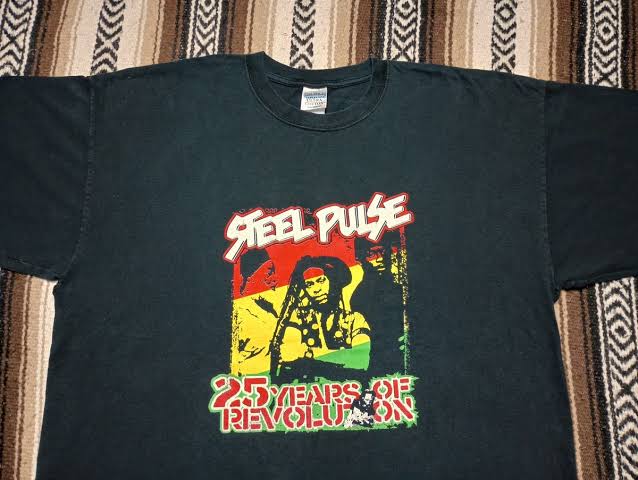
The band has 11 albums to its name, but two in the middle — True Democracy (1982) and Earth Crisis (1984) — are essential, loaded with the band’s best songs. I must have listened to those albums hundreds of times. There was a huge Steel Pulse show my senior year of high school which I missed for some reason, but I remember the T-shirt people were wearing the next day. Decked in yellow, red and green, on the back it read “Me Big, Me Broad, Me Jamming.” I wanted one of those shirts.
I never did see the band back in its day, but like so many bands do, they kept playing for years and years and the chance to see them arose later. So once again, I relived my youth years after the time through the music I loved. Original member and singer David Hinds was still leading the band, and he was not averse to playing those classics, even though several albums came after Earth Crisis. When “Worth His Weight in Gold (Rally Round)” was played early, perhaps the band’s best-known song, I knew the party was on.
And it was a party. Reggae bands have fun on stage, the music allows for this festive atmosphere, and Steel Pulse was in full-jamming mode. “Steppin Out,” one of the band’s liveliest tunes, had the band of eight moving as one, roaming the stage in a happy prance. “Chant a Psalm” and “Blues Dance Raid” were played to similar effect, and I want to say there was someone on stage with roller skates during “Roller Skates”. There remained a defiance in “Soldiers,” from the band’s first album Handsworth Revolution, which had the slower sound of Jamaican reggae, but generally Steel Pulse was there to entertain.
And no, they didn’t have those T-shirts — parts of your youth always remain in your youth.