March 1987, Cameo Theatre, Miami Beach, Fla.
I love slam dancing, I do (or did, my body isn’t so keen on it nowadays). Back in the ’80s, when what I consider to be punk music flourished, slamming was part of the culture, with Doc Martins and mohawks. I didn’t really ever have a mohawk (I tried and failed), and Doc Martins weren’t my thing, but man did I love slam dancing.
It’s what got me into the punk scene in full, the release that slam dancing provided for each show — punk shows were music and athletic events. I didn’t have 7 Seconds or Agent Orange albums, but when they were in town, I went to the shows. Cameo Theatre was the scene for these punk tours, and I’m sure I saw plenty of bands I don’t now remember.
The Bad Brains show was one I could never forget.
I was on spring break during my freshman year in college, a time when people go to exotic locales and sun on the beach, and since I grew up in one of those places, I just went home. I did go up to Daytona Beach for a few days (MTV was there, it was quite exciting), but made sure I got back for the Saturday show at the Cameo. I went with my friend Adrian, who wasn’t full into the punk scene but was game for anything.
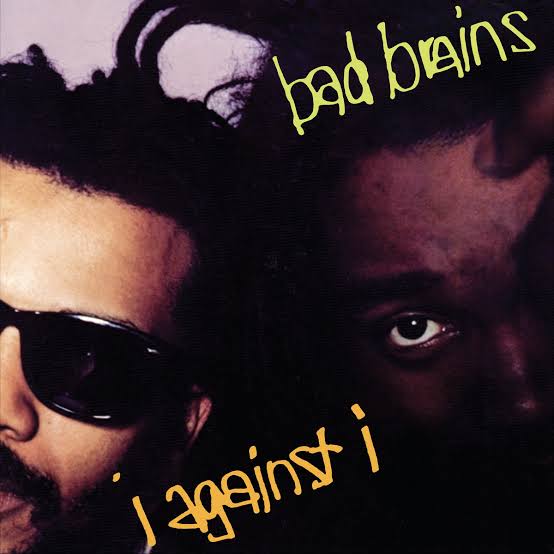
I didn’t know much about the band, though I was aware they mixed reggae with punk, which sounded too good to be true. Months before the band released I Against I, which was more rhythmic than previous albums, employing some funk throughout the 31 minutes. But it was still fast as hell, and loud, and rambunctious — it’s what you want to hear when you’re 18.
The four came on stage — H.R., Dr. Know, Darryl Jenifer, Earl Hudson — plugged in and tore the place apart. As lead singer, H.R. was manic and dynamic, moving across the Cameo stage with furious intent, spitting out words as he kept pace with the swift sound behind him. “Right Brigade” from Rock for Light gave way to “I Against I” and “House of Suffering” before “Re-Ignition,” one of the slow tunes on I Against I, slowed the room down a bit.
I was on the floor, getting bounced around the massive pit in front of the stage. Cameo still looked like an old movie house inside — fold-down wooden chairs lined up in rows in three sections rising from front to back while a larger standing-room only space was built in front. People sat on the back of chairs in the front row, taking breathers before entering the fray in front of them. The cool thing about moshing back in the day is that when you fell down, people picked you up — it was not an activity meant to harm one another, it was meant to be a community-releasing of aggression.
For the first 40 minutes, it was absolute madness. What followed was one of the greatest concert moments of my life.
Darryl Jenifer started up the bass, and with a casual ease the band slipped into its reggae classic “I and I Survive”. The pit was a confused mass. For a good part of an hour we were violently slamming into one another, but now what do we do? The answer, of course, was the same thing — only slower. What followed was five minutes of a slow-moving, laugh-inducing, rhythmically-choreographed mosh pit the likes I’ve never seen before or since. It was beautiful.
And then, with the quick strumming of Dr. Know’s guitar, the pace returned to normal with “The Youth Are Getting Restless,” which seemed like a planned song. The rest of the show was a blur, as many punk shows in those days were.
In recent years I’ve heard troubling reports about the band’s overt homophobia, which doesn’t make sense in the scene they were in, and it’s made me think much less of the band. How can a band which created such a unified concert moment be so dismissive of people because of their sexual orientation? I’ve read reports where the band, which still performs to this day, has changed its beliefs. I hope so.