I half wonder why anyone continues to create new dream pop music, and it’s not because I dislike the luxurious musical genre. Dream pop’s not done correctly unless it references its distinctive forefathers – Cocteau Twins, Julee Cruise, Bryan Ferry – but once a band does this, isn’t it simply recreating a sound definitively done by others? Any modern dream pop band worth a damn is more or less a tribute band.
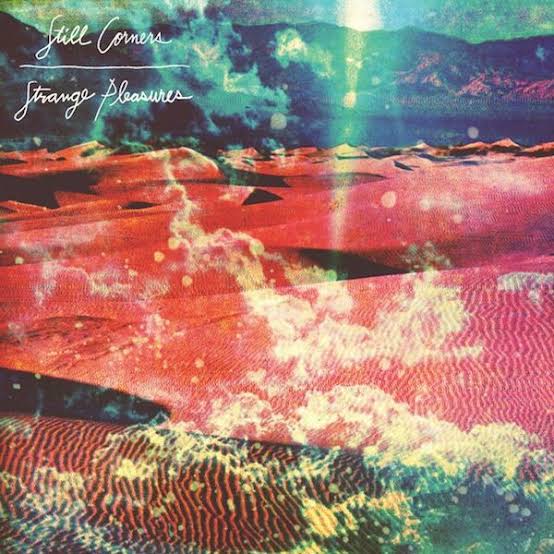
This doesn’t make Still Corners latest release Strange Pleasures any less an accomplishment, but you must know going in that songwriter/producer Greg Hughes and vocalist Tessa Murray aren’t creating new ground, just solidifying the one that’s been there for decades. Strange Pleasures is a lush delight down memory lane which occasionally finds an off-ramp of true originality. Despite this, it’s a road well worth taking.
“The Trip” opens the proceedings, a track that belies the 11 songs which follow. It carries the dream-pop feel but at twice the speed, a bouncy beat quickly joined by a warm, echo guitar with Robert Smith overtones. It’s almost two minutes in before Murray coos in with her dulcet voice (insert obvious Elizabeth Fraser reference here), but it captures the listener at once. It’s a strong first track (albeit it a tad too long).
It follows with two songs from the Cocteau Twins playbook, as “Beginning to Blue” and “I Can’t Sleep” are mirror images of “From the Flagstones” from Cocteau’s The Pink Opaque (dream pop’s Revolver) and “For Phoebe Still A Baby” from Blue Bell Knoll (dream pop’s Sgt. Pepper’s). I appreciate the effort, and “Blue” and “Sleep” are solid pieces of work, but the similarities are obvious. “All I Know” is eerie and lucid, a perfect fit for Bryan Ferry’s solo opus Boys and Girls.
But then Hughes opens up his bag of tricks with “Fireflies,” a mix of oriental synths, cascading cymbals and Murray’s multi-tracks of soaring lyrics. The evocative “Going Back to Strange” employs a lilting acoustic guitar amid an ethereal string background, letting Murray’s voice serve as the dominant instrument. The title track, the album’s final song, is reminiscent of Washed Out – it’s as if the album moved from past to present as it moved along its paces. Still Corners recognizes it doesn’t want to be stuck in one.
In some ways it’s not fair for me to review this, my pull toward dream pop has lasted for decades – my admiration of Cruise’s Floating into the Night and anything produced by the Cocteau Twins in the ’80s usurps all others who work to mimic those sounds.
But someone not steeped in the history of dream pop could hear Strange Pleasures and be elevated to a soothing nirvana – which would be just fine by me. Still Corners has created an art worth savoring, even if it sometimes leaves you craving a taste for the ones who came before.