A problem arises when modern bands comprised of members who were born in the 1980s try to replicate vintage music from the 1980s, especially to those of us who lived through the 1980s. Too often these attempts are watered down and tangential, and while I appreciate wanting to honor the great alternative bands of yore, don’t compare yourself to New Order or Depeche Mode just because you use synthesizers.
I guess no one wants to be known as the next Cutting Crew.
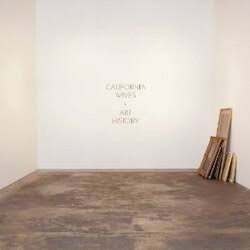
California Wives, a quartet from Chicago, has done little to dissuade people from comparing its sound to the Me Decade, going as far as saying its music is a John Hughes soundtrack. And while the band’s debut album Art History has tinges and pieces of Echo And The Bunnymen and OMD, it’s more reminiscent of underground bands from the past decade than pioneers from a quarter century ago.
Eliciting A Sunny Day in Glasgow and The Pale Pacific, Art History has a fine undercurrent of playful guitars, smart hooks and well-timed synths. Lead singer Jayson Kramer has the voice of a quiet, cool breeze, enough to make you pay attention from the outset but not enough to keep you there. It’s a theme running throughout the album, as the A-ha moments (pun intended) are few and far between.
It doesn’t help that “Blood Red Youth,” the album’s best song, opens the album. It has all the elements of a sterling track — a throwback sound which remains modern, a bouncy beat and a well-placed set of guitar rhythms and solos. Producer Claudius Mittendorfer’s previous work with Interpol is at play here, as the guitar at the song’s end apes “PDF” from Interpol’s debut album.
It’s a nice piece of work.
What follows is fine, but never peaks past what the first song established. “Tokyo” shares many of the same traits as “Blood Red Youth,” while “Marianne” is too cutesy for its own good.
“Los Angeles” tries to liven up the mood midway through. Employing a Psychedelic Furs groove that Richard Butler would approve of, the song finds Kramer having fun with the lyrics while guitarist Graham Masell is sharp with each strum. “Twenty Three” builds nicely from an inventive start, moving through the landscape in fine form. It’s the song which shows this band has the capacity to step out of character and become something more than a mild throwback to the past.
When I was a teen I adored the John Hughes soundtracks, partly because they included deeper tracks from semi-popular bands (such as Thompson Twins and The Smiths) which opened them up to a new oeuvre. But Hughes would never stand for 12 songs of similar take and tempo like the California Wives have produced here. He would, to borrow a song from The Breakfast Club, quickly forget about them.